
Reducing empty miles has become one of the biggest operational challenges for carriers in 2025. With fuel prices remaining volatile, driver shortages continuing, and customer expectations rising, fleets across the U.S. are turning to dispatch software for trucking to streamline planning, improve visibility, and prevent wasteful repositioning.
The right platform gives dispatchers a centralized way to match loads, assign drivers, monitor HOS availability, and avoid long stretches of empty movement – all while increasing revenue per mile. This technology is no longer only for large fleets; small carriers and owner-operators are adopting it nationwide to stay competitive.
Why Empty Miles Remain a Profit Killer in 2025
In the U.S. market, empty miles still account for an estimated 20–28% of total truck mileage in many long-haul operations. This is driven by mismatched freight, unpredictable schedules, regional imbalances, and limited visibility into available loads.
Fuel costs in 2025 continue to eat into margins, and every non-revenue mile amplifies operating expenses. Because of this, fleets need tighter coordination and better utilization – areas where dispatch software for trucking makes an immediate impact.
How Dispatch & Load Management Software Reduces Empty Miles
Modern dispatch platforms combine route visibility, freight matching, automated planning, and real-time communication – turning previously reactive decisions into proactive load management.
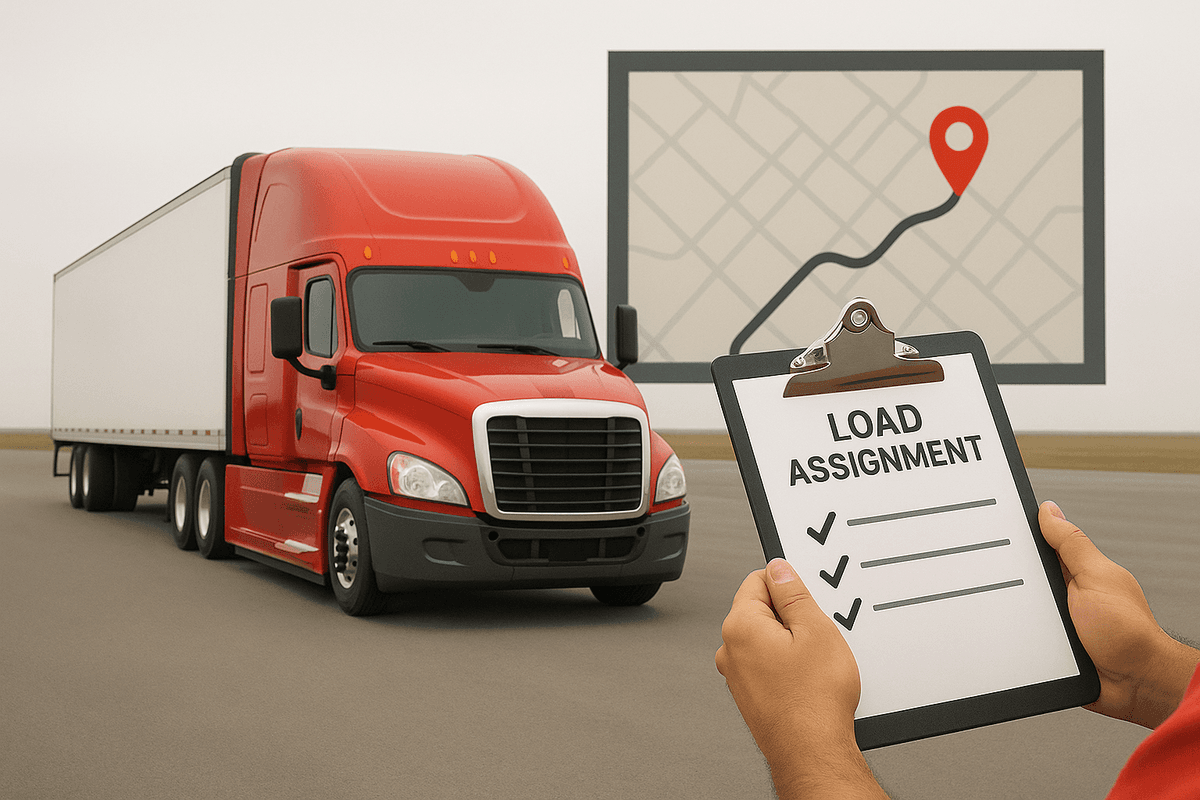
A major advantage is the way these systems streamline load assignment, giving dispatchers real-time access to available freight, driver locations, HOS status, and equipment capacity. This reduces guesswork, minimizes deadhead scenarios, and ensures every truck moves with purpose.
Platforms designed for fleet operations also include integrated dispatching tools, capacity planning features, and lane-specific alerts that help match the right driver to the right load at the right time. These capabilities are central to reducing repositioning miles and keeping trucks running efficiently.
Key Benefits for Fleets in 2025
Here are the most impactful improvements fleets see when implementing modern dispatch platforms:
- Better load assignment accuracy through real-time driver availability and equipment visibility.
- Fewer empty miles thanks to optimized routing and improved trucking efficiency.
- Faster communication between dispatchers, drivers, and customers.
- Integrated mapping, telematics, and HOS visibility for smarter carrier operations.
- Automated scheduling that reduces human error and last-minute scrambling.
- Improved revenue per truck through higher loaded-mile percentages.
- Enhanced tracking and reporting for data-driven decision-making.
Boosting Profitability Through Smarter Load Management
In 2025, profitability is directly tied to how well a carrier uses capacity. Dispatch platforms help fleets fill gaps in their schedules, avoid downtime, and book more consistent freight. With fewer empty miles, trucks generate more revenue, drivers stay busier, and dispatchers spend less time scrambling for last-minute loads.
Carriers also benefit from improved rate negotiations. When they track lane performance and understand where empty miles typically occur, they can negotiate more profitable round-trip lanes or secure stronger load commitments from brokers and shippers.
Why U.S. Fleets Are Prioritizing Dispatch Software in 2025
The demand for dispatch software for trucking continues to grow as fleets look for scalable, data-driven solutions. Regulations, visibility expectations, and market pressure mean manual dispatching simply cannot support modern operations.
By integrating dispatching tools, load planning, and communication into a single platform, carriers gain a competitive edge and can operate with higher efficiency even during fluctuating freight markets.
Fleets that adopt these tools early consistently report better lane performance, improved asset utilization, and a noticeable drop in empty miles – often within the first few weeks of implementation.
Final Thoughts
For U.S. fleets in 2025, reducing empty miles is one of the fastest ways to improve profitability. Modern dispatch platforms provide the visibility, automation, and load-matching intelligence needed to keep trucks moving and earning.
Whether a carrier runs five trucks or five hundred, dispatch software for trucking helps eliminate waste, strengthen driver planning, and improve overall trucking efficiency while supporting smarter, data-based carrier operations.