
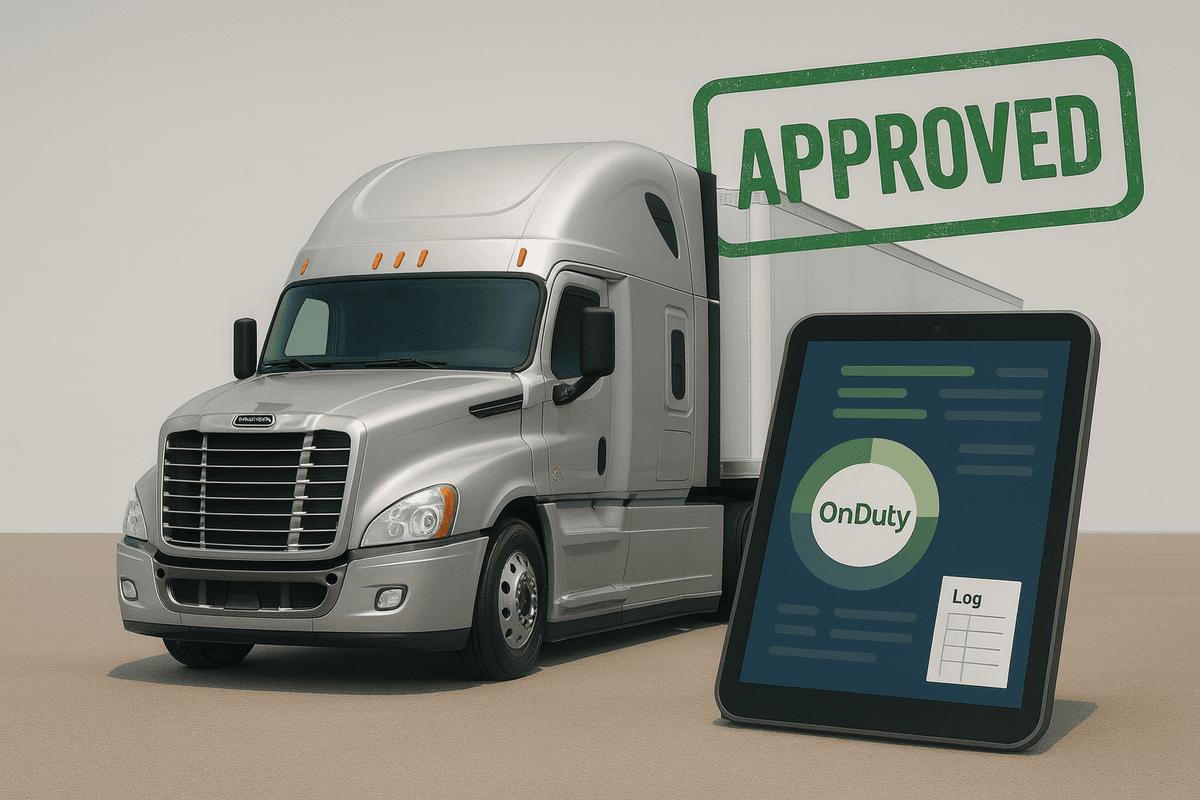
Understanding ELD Compliance in 2025
In 2025, compliance with the Federal Motor Carrier Safety Administration’s requirements for Electronic Logging Devices (ELDs) remains a core operational responsibility for carriers of all sizes. Most U.S. commercial drivers who must track their work hours under the Record-of-Duty-Status rule are required to use an ELD – a foundational part of any ELD compliance guide.
These devices automatically synchronize with a truck’s engine to record movement, driving time, and duty status, helping fleets maintain accurate HOS compliance and eliminating risks associated with manual logbooks. As the FMCSA tightens oversight, staying aligned with current FMCSA regulations is no longer just a formality – it is essential for avoiding violations, roadside delays, or out-of-service orders.
2025 FMCSA Rules: What Fleets Must Know
The core rules around ELDs haven’t changed dramatically, but the regulatory environment around them continues to evolve. Most drivers who operate beyond the short-haul radius or use logs more than eight days in a month must use an ELD – an expectation reinforced throughout industry-standard ELD compliance guide materials.
A few exceptions, such as certain short-haul drivers and drive-away/tow-away operations, still apply in 2025, but the FMCSA has signaled an ongoing review of these exemptions. This means carriers must stay alert to updates and be ready to adapt as FMCSA regulations shift.
To remain compliant, electronic logging devices must provide automatic engine synchronization, accurate duty-status recording, and the ability to transfer log data to enforcement officers. They must also include physical or electronic manuals, malfunction instructions, and backup paper logs –requirements that support both proper HOS compliance and successful roadside inspections.
What’s New in 2025: ELD Removals & Stricter Oversight
2025 brought increased scrutiny to the ELD marketplace. Throughout the year, the FMCSA removed several electronic logging devices from its approved list after discovering technical shortcomings or non-compliance with federal standards. Fleets using these units were given limited time to replace them before risking enforcement penalties.
Alongside device removals, the FMCSA also began tightening its vetting process for new devices, focusing on preventing tampering, ensuring data accuracy, and increasing accountability from ELD vendors. For fleets, this means regularly checking the FMCSA Registered Devices list is now a critical part of modern ELD compliance guide practices.
These enforcement trends directly affect daily operations. Whether you’re managing a two-truck business or a large national fleet, staying aligned with these updated FMCSA regulations is essential to avoid unexpected compliance failures.
Quick Action Checklist for 2025 Fleets
To stay ahead of compliance issues this year, fleets should:
- Review the FMCSA Registered ELD List monthly for newly revoked devices.
- Confirm all trucks use currently approved electronic logging devices.
- Train drivers on status changes to reduce HOS compliance violations.
- Keep user manuals and malfunction instructions in every truck.
- Set reminders to perform quarterly ELD audits and software updates.
- Integrate fleet telematics for unified compliance, routing, and maintenance data.
- Monitor ongoing updates to FMCSA regulations to prepare for any rule changes.
Choosing the Right Devices: What 2025 Fleets Should Look For
With more ELD vendors entering and leaving the market, selecting the right device in 2025 requires careful evaluation. The most reliable systems integrate ELD functionality with fleet telematics, combining GPS tracking, engine diagnostics, idle monitoring, and compliance dashboards. This allows managers to use the same data for routing, maintenance planning, and safety analysis – not just regulatory reporting.
Fleets should prioritize devices that appear on the FMCSA’s active registered list, offer strong malfunction detection, and provide clear, auditable reporting tools. For fast-growing operations, platforms that blend dispatching, routing, maintenance alerts, and fleet telematics insights with compliance tools can streamline operations far beyond basic ELD expectations.
Avoiding the Most Common Compliance Pitfalls
Even with ELDs installed, fleets still risk violations if they overlook other parts of the compliance process. Many carriers continue using revoked or outdated electronic logging devices without realizing they no longer meet federal standards. Others fall short because they don’t maintain onboard documentation, ignore malfunction alerts, or fail to properly train drivers –all issues that can quickly result in HOS compliance violations.
A successful ELD compliance guide emphasizes regular internal audits, consistent driver training, and timely software updates. These practices help protect fleets from preventable fines and out-of-service situations.
How Fleets Can Stay Compliant Throughout 2025
For 2025, carriers are encouraged to audit their entire fleet’s ELDs, train both drivers and managers on everyday usage and malfunction procedures, and adopt fleet telematics platforms that unify compliance with routing, safety, and performance monitoring. Staying current with FMCSA regulations and regularly reviewing the agency’s announcements ensures fleets never fall behind regulatory updates.
Whether you’re running a small owner-operator business or supervising a large national fleet, the goal remains the same: use approved electronic logging devices, maintain proper HOS compliance, and follow a structured ELD compliance guide that keeps every vehicle audit-ready.
Final Thoughts
2025 has reinforced that ELD compliance is not a “set it and forget it” requirement. With device removals, evolving FMCSA regulations, and the growing value of integrated fleet telematics, fleets must treat compliance as an ongoing operational priority. Choosing the right electronic logging devices, training personnel properly, and monitoring regulatory updates all play a crucial role in staying compliant, efficient, and safe.
A strong ELD compliance guide – supported by accurate data, reliable devices, and informed decision-making – helps fleets minimize risk and maximize operational control in a changing regulatory environment.