
Load Board Aggregators in 2026: 12 Platforms Checked Against What Their Own Sites Say
A check of what 12 load board platforms publicly say about the source of their freight, done on 17 September 2026. None of the 11 sites we could verify describes itself as pulling carrier-side freight from other load boards; most describe brokers posting directly to them.

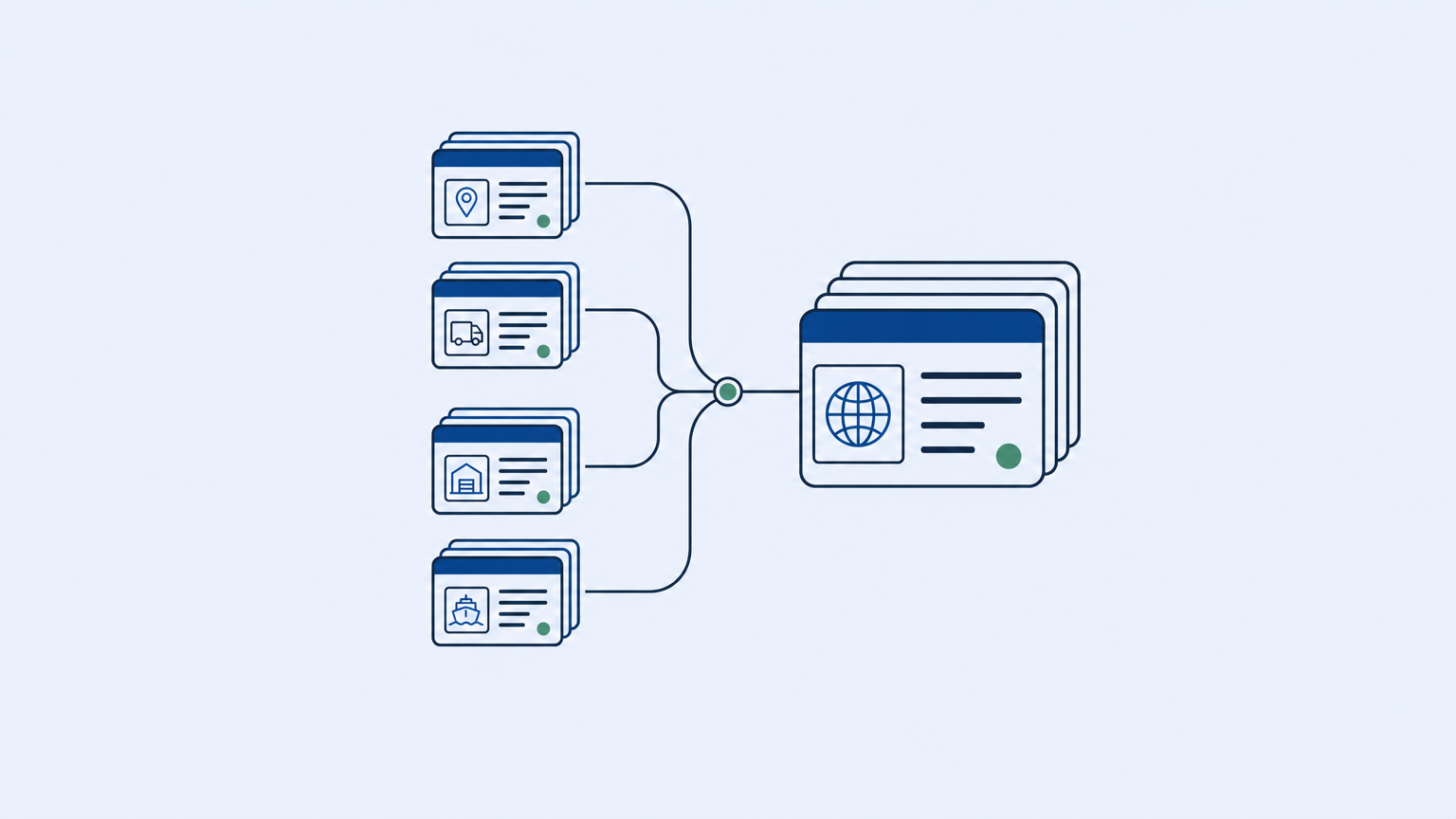
Quick answer: we checked what 12 load board platforms publicly say about where their freight comes from, on 17 September 2026. None of the 11 sites we could verify describes itself as pulling carrier-side freight from other load boards. Most describe a network of brokers posting directly to them. One publishes how many brokers feed it.
Checked and updated 17 September 2026. Every sourcing claim below was re-read on the vendor's own site that day.
The term "load board aggregator" is used loosely. Several products commonly grouped under it are direct-post networks, marketplaces or posting tools rather than aggregators in the strict sense, and that is the difference this article checks platform by platform.
What Is a Load Board Aggregator, and Does the Category Exist?
A load board aggregator is a platform that pulls freight postings from other platforms into one search. Hold on to that strict definition, because the loose one, any board with a lot of loads on it, covers almost every product in the category and tells you nothing.
It matters for one practical reason. If a platform aggregates, adding it adds coverage. If it describes its model as its own network, what you can verify is access to the brokers posting there, not additional load boards. Same price, different purchase, and the marketing for both uses the same three words: more loads, faster.
Which of the 12 Platforms Says It Pulls Freight From More Than One Source?
Every line is what the platform says about itself on its own site, read 17 September 2026, not our inference. Ratings are the TruckMyApps directory score that day.
Platform | What its own site says it carries | How the platform describes its model | TMA rating |
|---|---|---|---|
"trucking's largest load board network" | Describes its own network, positioned as the largest | 4.0 (11 reviews) | |
A carrier load board plus dry van, reefer and heavy haul boards of its own | Its own boards, split by equipment | 3.5 (20 reviews) | |
Trucker Path (TruckLoads) | 150,000+ loads daily "posted by over 800 different broker companies", free | Own network, breadth stated in brokers | 3.7 (38 reviews) |
Brokers post directly, "no subscription fees for drivers" | Own marketplace, free to carriers | 3.9 (14 reviews) | |
"more than 300K loads daily from reputable brokers & shippers on the Direct Freight network" | Own network, named as such | 3.8 (25 reviews) | |
Site returned 403 to our request on 17.09.2026 | Unchecked, we are not guessing | 3.8 (20 reviews) | |
"From grain and feed ingredient loads to fertilizer and aggregate" | A commodity network; the word aggregate refers to the cargo | 3.8 (30 reviews) | |
Amazon's own freight, booked through auctions and round-trip contracts | One shipper, one source | 3.7 (28 reviews) | |
"America's Largest Auto Transportation Marketplace", "20,000+ carriers in our network over the last year" | A vertical marketplace | no reviews yet | |
A marketplace where customers list and carriers bid, "over 35,000 active carriers" | A bidding marketplace | 3.7 (19 reviews) | |
C4 "aggregate[s] the data" on the loads a broker already books with its own carriers | Broker-side booking data, not carrier-side freight | 3.8 (31 reviews) | |
"LoadBoard Network is not a load board. It is a load posting service" | Aggregation pointed the other way: one broker, many boards | no reviews yet |
Two lines are worth pausing on. BulkLoads uses the word aggregate about grain and crushed stone, not about freight sources. LoadBoard Network says plainly that it is not a load board: it takes one broker's load and posts it to several boards at once. That is aggregation in the opposite direction: distributing one broker's posting across boards rather than collecting multiple boards into one carrier search.
How Do You Check an Aggregation Claim Before You Pay For It?
Ask for the number of distinct brokers or platforms feeding the board, in writing. One of the twelve publishes it: Trucker Path says 800+ broker companies post to TruckLoads. The rest quote loads per day. Daily load counts can also include multiple postings from the same broker or the same lane, so they do not tell you how many distinct freight sources you are gaining.
Then run a simple check of your own. Take a lane you run weekly, compare it on the board you already pay for and on the candidate over several days, and look at how many postings are actually unique to the candidate. That count is what the second subscription is buying, and it is the one number nobody publishes for you.
Does Searching More Boards Raise Your Rate Per Mile?
Not directly. More boards increase the number of offers you can compare; they do not change the rate attached to an individual posting, which the broker and the lane set. What breadth changes is the size of the set you choose from, and what you can afford to turn down.
Rate context is a separate feature: a board that shows what a lane paid last month lets you argue with a number instead of a feeling. It is priced separately from reach, which makes it worth weighing on its own when you compare two subscriptions.
Ran two boards side by side and found out how much of the freight was the same freight?
Nobody publishes that measurement, and the next carrier choosing between a free app and a paid subscription needs it more than another feature list.
How Do You Choose Your Combination of Boards?
There is no combination we can recommend from this research, because nothing here measures how the platforms perform against each other on your lanes. What the check does give you is the list of things that actually differ between two subscriptions:
- paid or free, and what the free tier leaves out;
- who posts the freight, stated in brokers rather than in loads per day;
- the equipment and the lanes you actually run;
- how many postings are unique to it next to the board you already pay for;
- rate context, broker credit data and factoring integration, and whether they sit above the base tier;
- cost measured per booked load rather than per month.
The category lists 24 platforms as of 17 September 2026 with ratings and reviews from carriers, which is where that comparison is worth running.
FAQ
What is a load board in trucking?
A load board is a platform where brokers and shippers post available freight and carriers search it. Boards differ by who posts to them and what equipment they cover.
What is the best load board for owner operators?
There is no single answer. Compare boards based on the brokers posting there, your equipment and lanes, unique postings, included tools and cost per booked load.
How do load board subscription costs affect an owner-operator's monthly overhead?
Do not evaluate a load board subscription only by its monthly fee. Measure the cost per booked load: if the board produced two loads last month, it cost half its fee per load.
Are there additional fees beyond the subscription cost on load boards?
Often yes. Rate analytics, broker credit data, factoring integration and extra seats are usually priced above the base tier. Ask what the advertised price excludes before comparing two boards on headline cost.
Written by Bruce Richmond, Operations Manager. Platform claims read on vendor sites 17 September 2026; directory ratings and the 24-platform count pulled from TruckMyApps the same day. Pricing and features move, so confirm both with the vendor before you subscribe.
Compare the platforms side by side in the Load Boards and Freight Marketplaces category, or read our wider roundup of load boards for truckers.