
What 3PL Software Actually Covers, and Where It Stops Being a TMS
"3PL software" covers three different purchases: software to run a 3PL, software to connect with a 3PL, and a 3PL service provider. How to tell which one you are buying, and how to work out whether a system pays back before you sign.

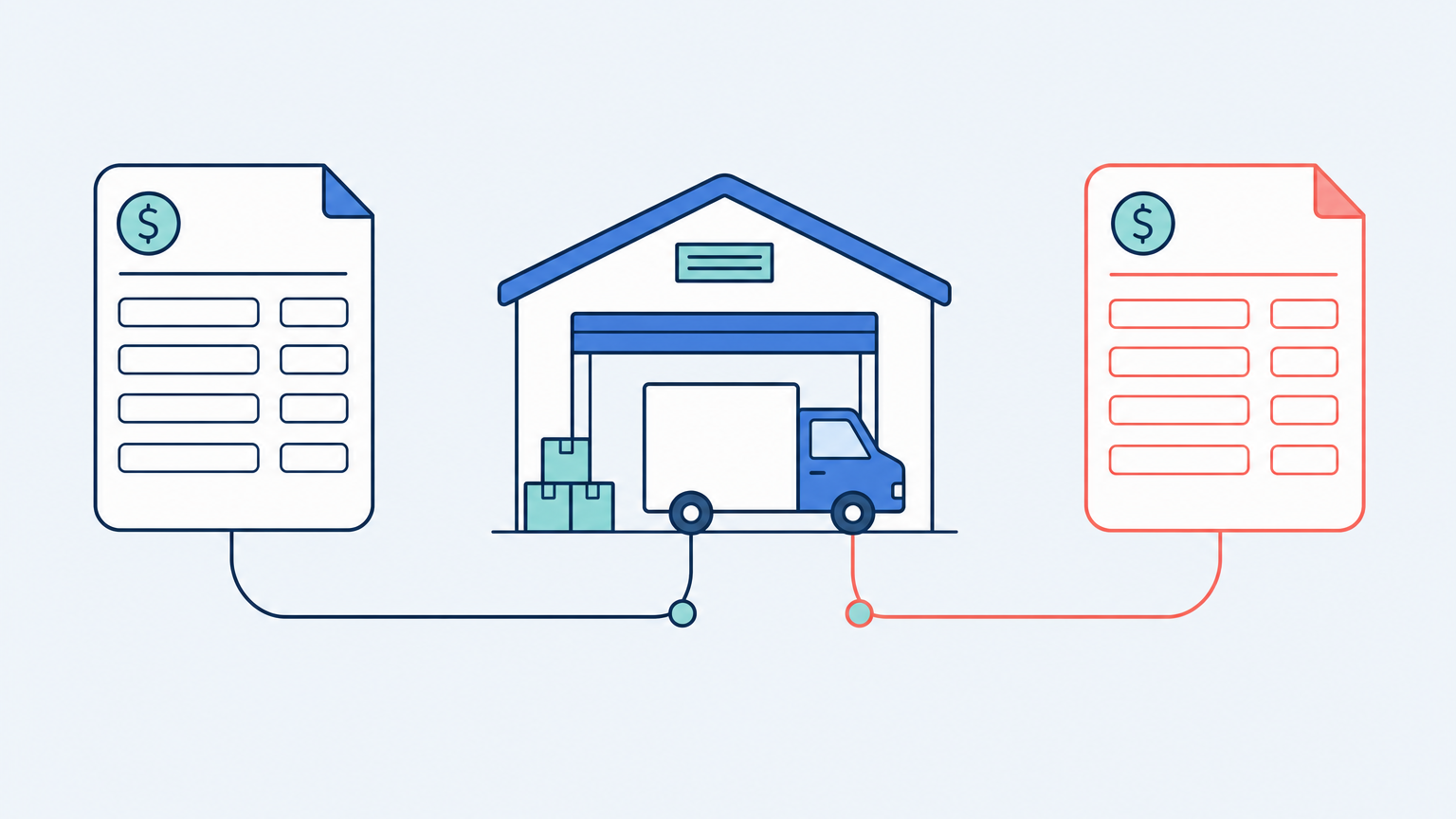
"3PL software" is used for three different purchases:
- Software to run a 3PL: the system a third-party logistics company or freight broker runs its own business on.
- Software to connect with a 3PL: the integration between your order system and a 3PL you already pay.
- A 3PL service provider: a company you pay to store and move your freight. That is outsourced logistics, not software.
They come out of different budgets and cost very different amounts. Buying the wrong one usually means paying every month for functions your business does not use.
Quick answer: if you are a 3PL or a broker, you need a broker or 3PL TMS. If you already use a 3PL and still rekey its orders, you need integration. If you want someone to handle your freight, you need a provider.
What Is 3PL Software?
3PL software is the operating system of a third-party logistics business. It books freight for several customers at once, assigns each load to an outside carrier, tracks the margin between what the customer pays and what the carrier costs, and settles with that carrier afterwards.
The two words that decide your budget are "several customers." A carrier's software runs one company's trucks and one company's money. A 3PL's software runs freight owned by other companies and moved by carriers the 3PL does not employ, so it has to keep every customer's rates, documents and margin apart from every other customer's. Customer-level rate agreements, per-load margin, carrier onboarding and settlement, and a customer portal all exist to hold that separation up.
The phrase also collides with a company name. 3PL Systems Inc sells a broker TMS called Brokerware, and its own site described the product as an "Automated TMS" when we checked it on 29.09.2026. Part of the search traffic behind "3PL systems" is people looking for that one vendor rather than for a category, which is why the results you got looked like a mix of the two.
Which Three Purchases Hide Behind "3PL Software"?
What you are buying | Whose budget it comes from | What it has to do | Where to compare options |
|---|---|---|---|
Software to run a 3PL | The 3PL or brokerage itself, as core operating cost | Many customers, margin per load, carrier settlement, customer portal | TMS software, 49 listed |
Software to connect with a 3PL | The shipper or carrier that already pays a 3PL | EDI or API order flow, status messages back, no rekeying | Shipping execution and carrier connectivity, 34 listed |
A 3PL service provider | Freight and warehousing spend, not the software budget | Warehousing, transportation, customer service, coverage where you ship | Logistics services and 3PL providers, 98 listed |
Counts from the TruckMyApps category pages on 29.09.2026.
What Does a Broker TMS Add, and What Does It Add to the Bill?
"TMS" is a broad label. The TMS category on TruckMyApps alone holds 49 products, and they are built for different users: shipper platforms such as Uber Freight TMS, carrier systems such as Transport Pro, and broker systems such as Brokerware. For a 3PL decision, the useful split is between shipper or carrier-oriented systems and broker or 3PL systems. Four functions mark the difference.
Function | Shipper or carrier-oriented TMS | Broker or 3PL TMS |
|---|---|---|
Whose freight | Your own shipments or your own trucks | Many customers' loads, kept separate |
Money on a load | Freight cost, or revenue per truck | Buy rate, sell rate and margin on the same screen |
Carrier side | Carriers you tender to, or your own drivers and equipment | Onboarding, insurance and authority checks, settlement, quick pay |
Customer side | Internal users | A portal your customer logs into |
If every load you move is your own, a shipper or carrier-oriented system usually covers it, and broker features add cost without adding use. Once you move other companies' freight on carriers you do not own, you need the margin and carrier settlement functions, and doing them in spreadsheets becomes the expensive option.
Carrier onboarding and authority checks are also where a lot of broker risk sits. We wrote up how the underlying federal records work in how carrier vetting data actually gets verified.
Looking for a broker or 3PL TMS? Compare the 49 TMS platforms on TruckMyApps with their user ratings and reviews, and filter to the highest rated before you book a demo.
When Does the Spreadsheet Cost More Than the System?
Load count is the wrong trigger, because it says nothing about what the manual version costs you. Compare two numbers instead.
Annual manual cost = staff hours per week × loaded hourly cost × working weeks + revenue lost to leakage (unbilled accessorials, late margin discovery, slow carrier pay)
System cost = one-time cost (implementation, data migration, training, lost productivity during rollout) + annual subscription
A system rarely removes all of the manual work or all of the leakage, so count only the share you expect it to remove. Then look at payback over the life of the system, not only year one, because the one-time cost lands in the first months and the savings continue after that.
A hypothetical example for a small brokerage:
Item | Assumption | Per year |
|---|---|---|
Manual work | 25 hours a week × $35 loaded cost × 50 weeks | $43,750 |
Leakage | $1,500 a month in unbilled accessorials | $18,000 |
Savings you can expect | 60% of the manual work and two thirds of the leakage | $38,250 |
Subscription | $1,500 a month | $18,000 |
One-time cost | Implementation, migration, training, slower first weeks | $22,000, once |
In year one the system costs $40,000 and saves $38,250, so it does not pay for itself inside twelve months. It still pays back in about 13 months ($22,000 one-time cost ÷ $1,687.50 monthly net saving), and over three years it saves $114,750 against $76,000 in total cost. Put your own figures into the same table before any vendor call. It is also the form that gets a purchase approved: hours back, revenue recovered, total cost, payback period.
Where Does the Wrong Category Cost You Twice?
Buying the wrong category means you keep paying for the old problem and add a new cost on top.
A shipper who buys a broker TMS to fix order rekeying now pays a platform fee and still pays the person who retypes the orders, because the gap was between two companies rather than inside one. A broker who buys a shipper-oriented TMS pays the licence and keeps the margin spreadsheet, the settlement workaround and the customer emails. A company that hands its warehousing to a 3PL and keeps paying for warehouse and transport modules it no longer uses is paying twice for the same job. That last case often goes unnoticed for a year or more, because the renewal was correct when it was first signed.
The simple safeguard: write on the approval which of the three purchases the invoice is for and what it replaces.
What Are "3PL Integration Solutions"?
A 3PL integration solution is the connection between your order system and your logistics provider's system, usually EDI or an API, so orders, labels and status updates move without anyone retyping them. It is a different purchase from a TMS, it is usually the smallest of the three, and for a lot of companies it is the only one they actually need.
The setup fee is rarely the number that matters. What matters afterwards is how the traffic is billed: included in the provider's rate, charged per connection, or charged per document, which makes the bill grow with your volume. Two other things belong in the quote. Whether the provider already supports the order and shipment message types your customers send, because a provider that does is configuring something and a provider that does not is starting a development project on somebody's invoice. And who carries the cost when a message fails overnight, since that decides whether a failure is a support ticket or a missed delivery you pay for.
Which One Do You Need?
- You are a broker or a 3PL: a broker or 3PL TMS. The margin and settlement functions are why it costs more, and your revenue runs through them.
- You are a carrier hauling under your own authority: a carrier-oriented TMS or dispatch software. The four jobs behind that choice are laid out in what truck load management software actually contains.
- You are a shipper already using a 3PL: integration. Fix the rekeying first, measure the hours saved after a month, then decide whether anything else is needed.
- You are a shipper without a 3PL: a provider. Coverage, warehouse locations and service response matter more than any software feature.
Ready to Compare Your Options?
TruckMyApps lists 49 TMS platforms, 34 integration and connectivity tools and 98 3PL providers, most of them already rated and reviewed by users. Open the category that matches what you are actually buying, filter to the highest rated options and read what users say before you start booking demos.
- TMS platforms for brokers, 3PLs, shippers and carriers, 49 listed
- Integration and connectivity tools, 34 listed
- 3PL service providers, 98 listed
FAQ
What is 3PL freight software?
3PL freight software is the system a third-party logistics company uses to book freight for its customers, assign it to outside carriers, track margin per load and settle with those carriers. It differs from a carrier's TMS mainly in handling many customers at once and paying carriers it does not own, and that difference is what the higher price covers.
Is "3PL systems" a product category or a company?
Both, and that is why results look mixed. 3PL Systems Inc is a vendor selling a broker TMS called Brokerware, verified on its own site 29.09.2026. The same phrase is also used generically for any software a 3PL runs on, so a search mixes one company with a whole category.
What do 3PL integration solutions actually connect?
They connect your order or e-commerce system to your logistics provider's system, usually through EDI documents or an API, so orders go out and shipment status comes back without manual entry. Compare quotes on how the traffic is billed after setup, not on the setup fee alone.
Written by Pavlo Kobzar. Directory counts and the vendor check current as of 29.09.2026. Vendor descriptions are compiled from public pages, not confirmed with each company.